



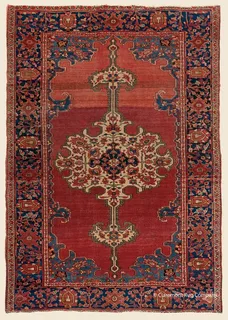
In a world of fast furniture and mass production, handcrafted objects stand apart. A hand-knotted Persian rug, an antique Japanese woodblock print, or a 19th-century leather-bound book carries something that factory-made items cannot replicate: time, patience, and cultural memory.
Auctions that bring these pieces together offer a glimpse into traditions that span continents and centuries.
The Craft Behind Hand-Knotted Rugs
Every authentic Persian rug begins on a loom, where artisans tie thousands—sometimes millions—of individual knots by hand. The density of those knots, measured in KPSI (knots per square inch), reflects the level of detail within the design. A rug with 300+ KPSI allows for delicate floral motifs and complex medallions that resemble painted artwork.
Regions known for exceptional craftsmanship include:
- Tabriz, celebrated for precision and silk accents
- Kashan, known for classic medallion compositions
- Kerman, admired for flowing floral patterns
- Nain, valued for refined detailing and lighter tones
- Mashad, often woven in grand, room-defining sizes
These weaving centers developed distinct identities shaped by local materials, artistic heritage, and trade history.
More Than Decoration: Symbolism in Design
Antique rugs are rarely just decorative floor coverings. Tribal pieces may incorporate protective symbols or totemic imagery tied to family lineage. Pictorial rugs can depict historical scenes or landscapes, preserving visual narratives within woven form.
The dyes used in older rugs—often vegetable-based—age gracefully, creating subtle variations that deepen over time. This natural evolution contributes to the character collectors appreciate today.
Fine Art and Printed Legacy
It is not uncommon for auctions to pair rugs with Japanese woodblock prints or Chinese scroll paintings. Both art forms rely on meticulous technique and collaborative skill. Just as rug weaving demands coordination between dyers and weavers, woodblock printing requires designers, carvers, and printers working in harmony.
Similarly, leather-bound literary collections from the 1800s reflect an era when books were designed to endure physically as well as intellectually.
Why Auctions Matter Today
Auctions serve as temporary exhibitions where diverse forms of craftsmanship intersect. They provide detailed information about origin, dimensions, materials, and condition—essential factors for collectors seeking authenticity.
For anyone looking to understand how to buy premium rugs online, exploring curated auction platforms can offer valuable insight into weaving styles, knot density, and regional distinctions while viewing available pieces in one place.
Ultimately, these auctions are less about commerce and more about continuity. They allow historic craftsmanship—whether woven, printed, or bound—to pass from one generation to the next, preserving artistry in a modern world that rarely slows down long enough to create it.
