



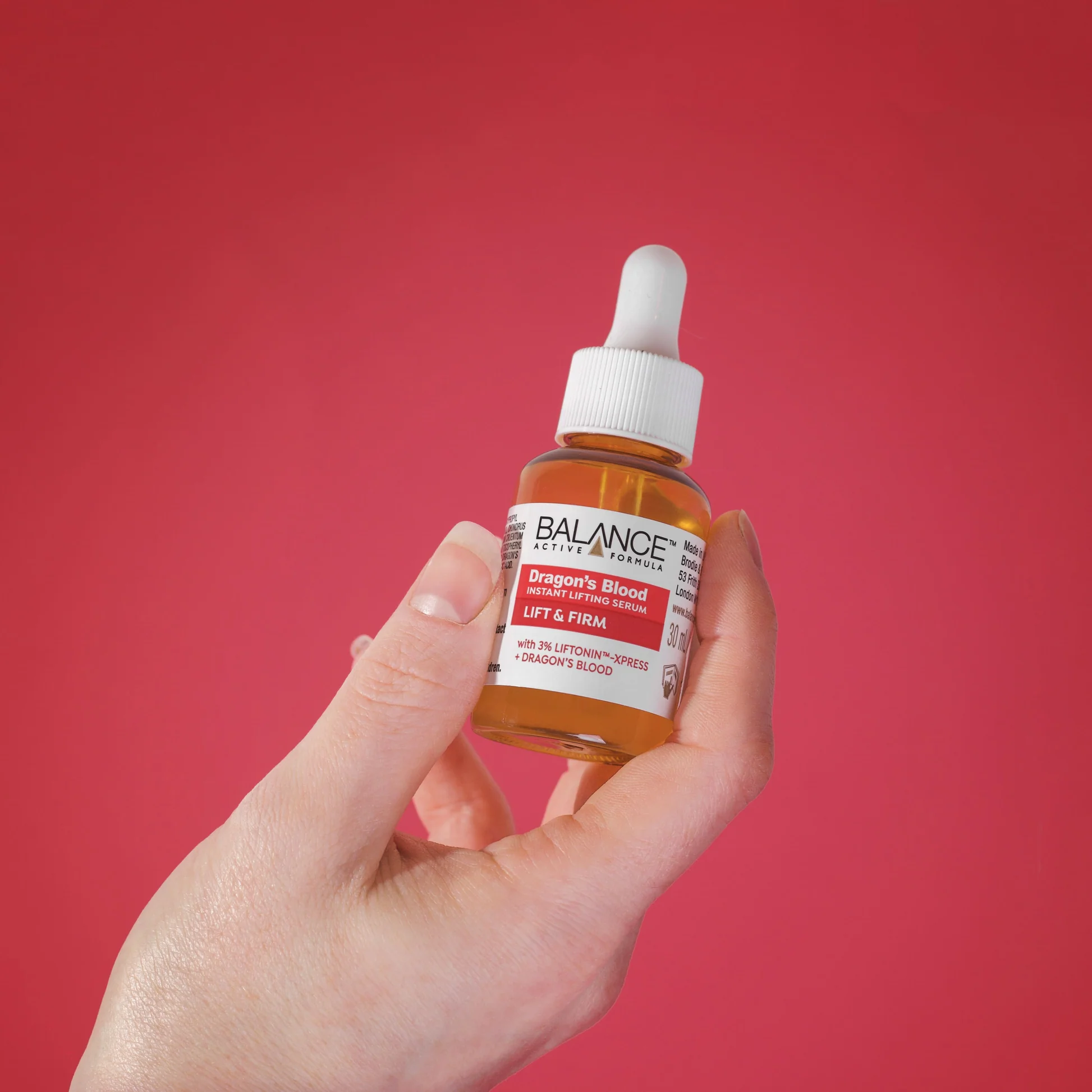
The serum category is where most women make their most considered skincare investments — and where the most consequential ingredient decisions happen. Vitamin C, retinol, and hyaluronic acid have dominated the conversation for years, accumulating enough consumer familiarity and clinical literature to become default recommendations across skin types and concerns. Against this backdrop, a dragons blood serum can appear to be a niche alternative rather than a serious contender. That perception does not survive a direct comparison. Dragon’s blood resin addresses several of the same biological mechanisms as these established actives — in some cases through gentler delivery, in others through complementary pathways that make it a more practical daily-use option for women whose skin cannot tolerate the intensity that vitamin C, retinol, and layered hyaluronic acid formulations sometimes demand.
Understanding how dragons blood serum compares — honestly, specifically, and without overclaiming — gives women the information they need to make the right choice for their skin.
Dragons Blood Serum vs. Vitamin C Serum
Vitamin C is the most widely used antioxidant active in skincare — and for good reason. L-ascorbic acid, its most potent form, has substantial clinical evidence for brightening, collagen stimulation, and antioxidant defense against UV-driven oxidative damage. It is genuinely effective when formulated correctly.
The practical challenges of vitamin C serum are equally well-documented. L-ascorbic acid is notoriously unstable — it oxidizes rapidly on exposure to light and air, turning products yellow or orange and losing efficacy before the bottle is finished. Effective concentrations — typically 10 to 20 percent — produce stinging, redness, and irritation in sensitive skin types. And its low pH requirement for stability conflicts with the pH range of several other common actives, complicating layering decisions for women using multiple serums.
Dragons blood serum addresses the antioxidant and collagen-stimulation mechanisms that make vitamin C valuable — through proanthocyanidins and phenolic acids that provide broad-spectrum free radical neutralization, and through taspine’s fibroblast-stimulating action that supports collagen synthesis — without the stability challenges, irritation risk, or pH conflict. For women who have found vitamin C serums too sensitizing or too unstable to use consistently, dragons blood provides a viable alternative that delivers overlapping benefits through a more tolerable formulation profile.
The honest comparison: vitamin C at effective concentrations produces faster visible brightening than dragon’s blood for most users. Dragons blood serum produces comparable antioxidant defense and collagen support with significantly lower irritation risk and greater formulation stability — making it the more practical daily-use option for sensitive, reactive, or barrier-compromised skin.
Dragons Blood Serum vs. Retinol Serum
Retinol is the most clinically validated over-the-counter anti-aging active available — with decades of peer-reviewed evidence supporting its capacity to accelerate cellular turnover, stimulate collagen production, reduce fine line depth, and improve overall skin texture and tone. For women who can tolerate it, a well-formulated retinol serum is one of the highest-return investments in a skincare routine.
The tolerance question is significant. Retinol’s mechanism — binding to nuclear receptors and fundamentally altering cellular behavior — is powerful precisely because it operates at a level that the skin is not accustomed to. The purging, peeling, dryness, and photosensitivity that accompany retinol initiation are well-known enough to have their own terminology in skincare communities. Building retinol tolerance requires weeks of careful titration — starting at low concentrations, limiting frequency, and managing the barrier disruption that accompanies the adaptation period. For women with sensitive, reactive, or rosacea-prone skin, that adaptation period may be intolerable or indefinitely prolonged.
Dragons blood serum addresses the collagen stimulation and cellular renewal mechanisms that make retinol valuable — through taspine’s fibroblast activation and the resin’s regenerative compound profile — without the receptor-level cellular disruption that drives retinol’s side effect profile. The results are more gradual than retinol at effective concentrations, but they are achievable daily, at full-face application, without the photosensitivity that makes retinol incompatible with morning use or the purging phase that discourages consistent use in the early weeks.
The honest comparison: retinol produces faster, more dramatic structural improvement than dragons blood serum for women who can tolerate it. For women who cannot — or who want an effective daily active that works morning and evening without the management overhead retinol requires — dragons blood serum delivers meaningful collagen and renewal support without compromise.
Dragons Blood Serum vs. Hyaluronic Acid Serum
Hyaluronic acid occupies a different position in this comparison — it is primarily a hydration active rather than an anti-aging or repair active, and its mechanism is fundamentally different from the others discussed. It does not stimulate collagen, modulate inflammation, or accelerate cellular renewal. It draws water to the skin surface and, depending on molecular weight, into the upper layers of the epidermis — providing immediate plumping, smoothing of surface fine lines, and improved skin texture through hydration rather than biological activity.
The limitations of hyaluronic acid are less about tolerability than about scope. It addresses dehydration effectively — but dehydration is one component of skin aging and skin condition, not the whole picture. A hyaluronic acid serum used alone leaves the collagen, inflammation, and barrier mechanisms that drive longer-term skin quality entirely unaddressed.
Dragons blood serum and hyaluronic acid are less competitors than complements. Applied sequentially — hyaluronic acid first to draw water into skin cells, dragons blood serum second to deliver active compounds into hydrated tissue and reinforce barrier function to retain the moisture drawn in — the two produce a combined effect that neither delivers independently. The hyaluronic acid improves the skin environment for active penetration; the dragons blood serum provides the biological activity that hyaluronic acid alone cannot.
The honest comparison: hyaluronic acid serum and dragons blood serum address different mechanisms and are most effectively used together rather than as alternatives. If choosing one, dragons blood serum’s multi-mechanism profile — covering repair, inflammation, collagen, barrier, and antioxidant defense — delivers broader skin benefit than hyaluronic acid’s single-mechanism hydration focus.
Where Dragons Blood Serum Has a Genuine Advantage
Across this comparison, a clear picture emerges of where dragons blood serum holds a specific and meaningful advantage over its conventional counterparts:
Tolerability for sensitive and reactive skin. Dragons blood serum delivers anti-aging, antioxidant, and repair benefits without the pH sensitivity of vitamin C, the adaptation challenges of retinol, or the potential for hyaluronic acid to draw moisture from deeper skin layers in low-humidity environments. For women whose skin has historically struggled with conventional actives, this is a significant practical advantage.
All-day, every-day usability. Unlike retinol — which requires careful sun management and is typically restricted to evening use — dragons blood serum can be applied morning and evening without photosensitivity concerns, maximizing the consistency that produces compounding results over time.
Multi-mechanism coverage in a single product. Vitamin C addresses antioxidant defense and brightening. Retinol addresses cellular turnover and collagen. Hyaluronic acid addresses hydration. Dragons blood addresses all of these mechanisms — at a more moderate intensity than the dedicated actives — in a single formulation. For women building a minimal, high-efficacy routine, this consolidation has meaningful practical value.
Barrier support alongside active delivery. Vitamin C and retinol can compromise barrier integrity during use — particularly at higher concentrations. Dragons blood serum supports barrier function as part of its mechanism, making it inherently more compatible with barrier-compromised, post-procedure, or chronically sensitive skin.
The Right Serum Is the One Your Skin Will Actually Use
Skincare efficacy is inseparable from consistency — and consistency requires a product that the skin tolerates well enough to use daily without interruption. The most clinically validated active in the world produces no benefit sitting unused because the skin reacted badly to it at week two.
For women whose skin history includes sensitivity, barrier compromise, or intolerance of conventional actives — and for those who want a single serum delivering broad-spectrum benefit without the management overhead of a multi-active routine — dragons blood serum is not a compromise. It is a considered, evidence-grounded choice.
The Serum That Works With Your Skin, Not Against It
The best active is the one your skin accepts, responds to, and benefits from consistently. Essance Skincare has developed a dragons blood serum built for exactly that standard — delivering the repair, collagen support, antioxidant defense, and barrier reinforcement that serious skin health requires, in a formulation that sensitive, reactive, and discerning skin can use every single day. Explore the full collection and find the serum your routine has been missing.
