



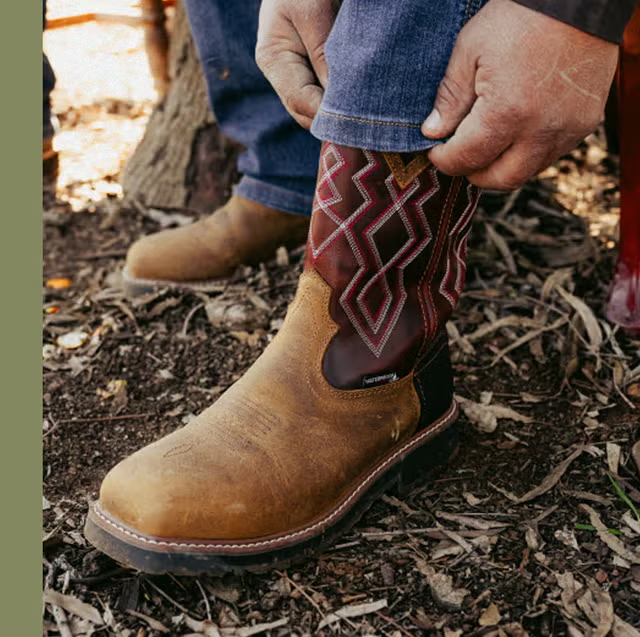
There is a version of the pull on boot conversation that frames it as a trade-off — the convenience of laceless entry against the precision fit and ankle support of a laced construction. That framing has never been entirely accurate, and in the current generation of purpose-engineered men pull on boots, it has become genuinely obsolete. The pull on work boot worn by ranch hands and oil field workers across generations of demanding physical labour has been refined through modern construction technology into a category that delivers fit security, structural support, occupational protection, and all-day comfort alongside the practical donning and doffing advantages that made the format enduringly popular in the first place. For men across work, outdoor, and casual contexts who have defaulted to laced boots without seriously evaluating the alternative, the current state of the pull on boot category is worth a closer look.
The Functional Heritage Behind the Format
Pull on boots did not become a staple of working men’s footwear because they were a compromise. They became a staple because in the environments where they were developed — ranching, farming, oil and gas extraction, and the full range of physically demanding outdoor work that characterised the American working landscape — they solved practical problems that laced boots could not.
Laces collect mud, get caught in equipment, freeze in cold weather conditions, and require fine motor manipulation that is inconvenient at the start and end of a long working day in rough conditions. A pull on boot with a well-engineered shaft and heel profile goes on and comes off in seconds without any of those complications — a practical advantage that compounds across hundreds of working days over the life of a pair of boots.
The heel profile of a traditional pull on work boot — the slightly undercut, higher heel that distinguishes work boot geometry from casual and athletic footwear — was not a stylistic decision. It was a functional one: providing a positive stop against stirrups, equipment rungs, and ladder steps that prevents the foot from slipping through and reduces the risk of entanglement in the operational environments where pull on boots were most commonly worn. That functional geometry has been retained in contemporary pull on work boots because the environments and demands that made it valuable have not changed.
What Modern Construction Has Changed
The traditional pull on work boot construction — a full-grain leather upper, a leather or stacked heel, a leather insole, and a relatively minimal midsole — was built for durability and function in a way that did not prioritise all-day comfort in the modern sense of the term. Breaking in a traditional pull on work boot was a genuine physical process measured in weeks of discomfort before the leather conformed sufficiently to the wearer’s foot to deliver comfortable extended wear.
Contemporary pull on boot constructions have addressed this directly without compromising the durability and functional geometry that made the format valuable. Cushioned insole systems — memory foam, gel, and EVA constructions — provide immediate comfort from the first wear rather than requiring a break-in period before the boot is manageable across a full shift. Lightweight midsole compounds reduce the overall boot weight while maintaining the underfoot protection and energy return that hard surface and uneven terrain work demands. Moisture-wicking lining materials manage the internal boot environment across extended wear in ways that traditional leather linings cannot, reducing the perspiration accumulation that contributes to discomfort and odour during long working days.
Full-grain leather upper construction in premium pull on work boots has been supplemented by advanced finishing and treatment processes that improve water resistance, stain resistance, and surface durability beyond what untreated leather delivers — extending the service life and maintaining the professional appearance of the boot across demanding occupational use without requiring the intensive care regimen that traditional leather demanded.
Fit Security Without Laces
The fit security concern associated with laceless boot constructions is the most legitimate reservation that experienced boot wearers bring to the pull on category — and it is worth addressing directly rather than dismissing.
A pull on boot that fits correctly holds the foot through the geometry of the last and the fit of the shaft rather than through lace tension. The instep fit is the critical dimension — the boot should require a degree of deliberate effort to pull on over the instep, and that resistance at the instep is what holds the heel in the boot during wear and prevents the heel slip that an oversized pull on boot produces. A pull on boot that slides on without resistance at the instep is too large, regardless of how the toe box and shaft feel.
Shaft fit across the ankle and lower calf contributes structural support that complements the instep fit. A shaft that fits snugly without compressing provides lateral stability during movement on uneven terrain — a support function that in a laced boot is provided by lace tension but in a pull on is delivered entirely through construction geometry and last design.
For men with high insteps — a common morphology that makes pull on boot entry more difficult — the gore inserts built into the shaft of many contemporary pull on constructions provide the flexibility needed for entry without compromising the fit security that the shaft delivers during wear. These elastic gore panels are a construction detail worth specifically seeking out in pull on boots intended for wearers who have previously found laceless entry impractical.
Occupational Specifications Across the Pull On Category
Contemporary pull on work boots are available across the full range of occupational safety specifications that working professionals in trade, construction, oil and gas, agriculture, and related industries require — addressing the assumption that laceless boots are inherently less capable of meeting the protective requirements of demanding work environments.
Steel toe and composite toe configurations deliver ASTM-rated impact and compression protection in pull on constructions across the major work boot brands — making pull on boots a compliant specification choice in occupational environments where safety toe protection is mandated, without requiring the wearer to choose between occupational safety compliance and the practical donning advantages of the laceless format.
Electrical hazard ratings, puncture-resistant midsole plates, and slip-resistant outsole certifications are all available within the pull on work boot category at quality tiers appropriate for genuine occupational use — not simply as marketing qualifications applied to constructions that meet the specification minimums without meaningfully exceeding them.
Waterproofing through full-grain leather construction, membrane waterproofing systems, or combination approaches is available across pull on work boot constructions for environments where wet conditions are a consistent operational variable — delivering the foot protection that outdoor and agricultural working environments demand from footwear worn across full working days in unpredictable weather conditions.
Matching Pull On Construction to Intended Use
Pull on boots span a meaningful range of construction profiles within the broader category — from traditional western-influenced work boots with higher heels and pointed toe profiles to more contemporary rounded toe constructions with lower heels and outsole geometry designed for hard surface industrial environments. Matching the construction profile to the intended use and the specific geometry of the wearer’s foot is the specification decision that determines whether a pull on boot delivers its potential or falls short of it.
Higher heel profiles — characteristic of traditional western and ranch work constructions — are appropriate for outdoor, agricultural, and mounted work environments where the heel geometry serves a functional purpose. Lower, broader heel profiles are more appropriate for hard surface industrial and urban work environments where the elevated heel geometry of a traditional work boot creates instability on flat surfaces across extended standing and walking.
Toe profile selection follows the same logic — a pointed or snip toe profile that is functional in a western work context creates forefoot compression in an industrial standing context that a rounded or broad square toe eliminates entirely.
BootsPlusMore carries men’s pull on boots across work, western, outdoor, and casual constructions — spanning safety toe specifications, waterproofing configurations, and the full range of heel and toe profiles that match pull on boot geometry to the specific working and lifestyle environments that men across trades, outdoor work, and casual wear require.
