



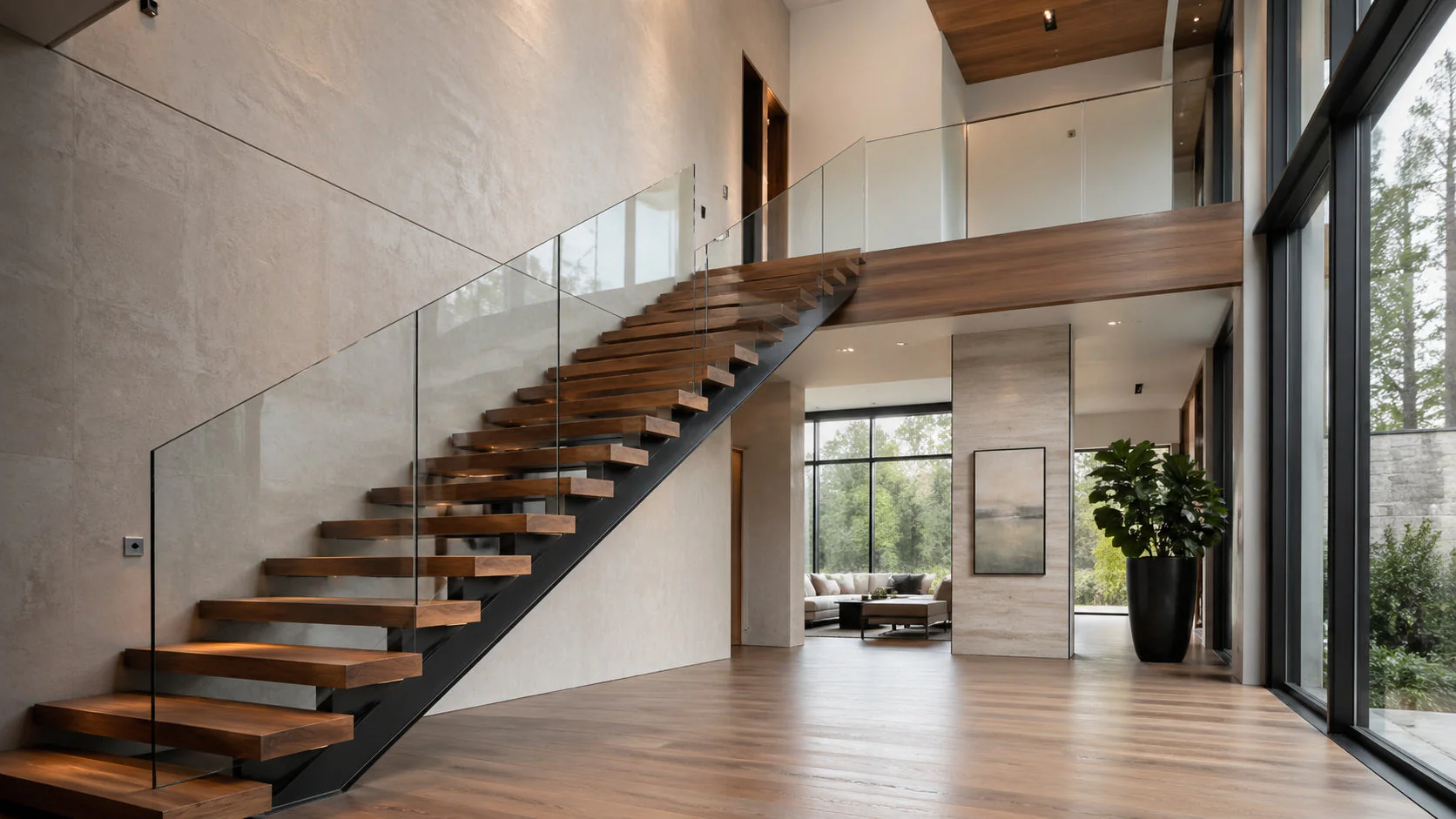
The finishing debate in hardwood stair tread specification has been running in the trade for as long as prefinished products have been available at a quality level worth considering for premium residential applications. Site-finishing advocates cite custom colour flexibility and seamless visual integration with adjacent flooring as the arguments that prefinished cannot answer. Prefinished advocates cite finish hardness, schedule certainty, and immediate serviceability as the advantages that site-finishing cannot replicate under occupied residential conditions. For flooring dealers, remodeling contractors, homebuilders, and design professionals whose project mix increasingly involves clients with high expectations for both outcome quality and project efficiency, the specification conversation around stair treads has been moving consistently in one direction — and understanding why prefinished has been winning that argument at the premium end of the residential market is the context that makes the specification recommendation easier to deliver with confidence.
What the Finishing Debate Is Actually About
The site-finishing versus prefinished debate is not fundamentally a debate about finish quality in the abstract sense. It is a debate about which approach delivers the best combination of finish performance, visual outcome, and operational efficiency for a specific project type — and the answer varies by project context in ways that make a categorical position on either side less useful than a clear framework for evaluating the trade-offs in each situation.
Site-finishing delivers maximum flexibility. The ability to apply a custom stain colour on location, adjust the tone in real time against the specific wall colours and lighting conditions of the actual space, and blend the tread finish imperceptibly with the adjacent flooring product is a genuine advantage in projects where visual integration demands the highest level of precision. For custom home projects where every finish decision is bespoke and the finishing trade is already embedded in the project scope, site-finishing remains the appropriate specification for clients and designers whose priorities justify its requirements.
Prefinished treads deliver maximum operational certainty. A factory-applied UV-cured finish at the premium quality tier produces hardness and abrasion resistance that site-applied finishes in occupied residential conditions cannot consistently match — not because the finishing trade lacks skill, but because the conditions under which site-finishing occurs in an occupied home are fundamentally different from the controlled factory environment in which premium prefinished products are produced. Temperature, humidity, dust contamination, application consistency across the full flight, and the cure conditions available in a home being lived in during renovation all introduce variables that factory finishing eliminates entirely.
The Finish Performance Gap That Has Shifted the Specification
The performance advantage of factory-applied UV-cured finishes over site-applied waterborne and oil-based finishes in stair tread applications is not a marginal one — and it has widened as prefinished finish technology has advanced while the on-site finishing conditions in occupied residential renovations have remained as variable as they have always been.
UV-cured aluminum oxide finish systems — the technology employed in premium prefinished hardwood tread products — are cured by ultraviolet light exposure in a fraction of a second, producing a finish layer that achieves its full hardness immediately rather than through the multi-day cure cycle that waterborne and oil-based site-applied finishes require. The hardness values achieved by UV-cured aluminum oxide finishes consistently exceed those of site-applied alternatives by a margin that is meaningful in the wear context of a residential stair tread.
The practical consequence of this performance differential is long-term appearance retention. A stair tread finished with a premium UV-cured factory finish maintains its surface appearance under the concentrated heel strike and foot traffic loads of residential use significantly longer than an equivalent tread finished on site — which translates directly into client satisfaction, reduced callback frequency, and the kind of installation longevity that generates referrals and repeat business for the contractors and dealers who specify it.
Schedule and Operational Advantages That Trade Professionals Value
The operational case for prefinished stair treads is built on a set of practical advantages that experienced trade professionals recognise as directly affecting project profitability, client satisfaction, and the downstream business relationships that determine long-term success in the residential market.
Schedule certainty is the most immediately valuable advantage. A prefinished tread installation is complete when the tread is set and the adhesive or fasteners are cured — there is no finishing schedule to coordinate, no return visits for subsequent coats, no cure period during which the staircase is out of service and the client’s daily routine is disrupted. For contractors managing multiple simultaneous projects, the elimination of the finishing schedule from stair tread installations reduces the scheduling complexity that site-finishing introduces across a full project pipeline.
Immediate serviceability is the client-facing advantage that most directly affects satisfaction during the project period. A staircase returned to service the day after tread installation — rather than three to five days after site-finishing is complete and the finish has cured sufficiently for traffic — is a meaningful quality-of-life improvement for clients living in their homes during renovation. The absence of finish odour, ventilation requirements, and the precautions associated with wet finish coats in an occupied space compounds that advantage across the full finishing schedule of a site-finished installation.
Consistent results across the full flight is the quality assurance advantage that prefinished treads deliver without the skill dependency that site-finishing introduces. A factory-finished tread delivers the same colour, sheen, and surface quality on the last tread installed as on the first — without the variation that application consistency, material batch differences, and ambient condition changes introduce across the multi-day schedule of a site-finished stair installation.
Finish Matching: The Specification Detail That Determines Visual Integration
The primary specification challenge of prefinished stair treads — coordinating the factory-applied finish with the prefinished flooring product in the surrounding rooms — is the detail that most directly determines whether a prefinished tread installation achieves the seamless visual integration that site-finishing advocates cite as their strongest argument.
The challenge is real and worth acknowledging directly rather than minimising in the specification conversation. Prefinished flooring and prefinished tread products from different manufacturers apply finish systems with different sheen levels, tone profiles, and surface textures that read as inconsistent when installed in visual proximity — regardless of how closely the stain colour matches between products. The solution is not to accept visual inconsistency as an inherent trade-off of prefinished specification. It is to work with suppliers whose prefinished tread range is developed in deliberate relationship with the flooring products most commonly specified in the premium residential market — with finish profiles engineered to coordinate across products rather than simply to satisfy individual product quality standards in isolation.
Species consistency between tread and adjacent flooring is the foundational requirement that no finish coordination can compensate for when it is absent. A prefinished white oak tread installed alongside prefinished white oak flooring in the surrounding rooms provides the species foundation from which finish coordination produces a visually integrated result. A tread and flooring product in different species will read as a mismatch regardless of how precisely the stain colours are aligned — because the grain character, natural tone, and finish interaction of different species produce visually distinct results under identical stain applications.
Wood Stair Co supplies prefinished hardwood stair treads across species, sawn profile, and finish specifications built to the quality and consistency standards that flooring dealers, remodeling contractors, homebuilders, and design professionals require for premium residential stair installations — with finish ranges developed to coordinate with the prefinished flooring products most commonly specified in the market segments their trade customers serve.
