



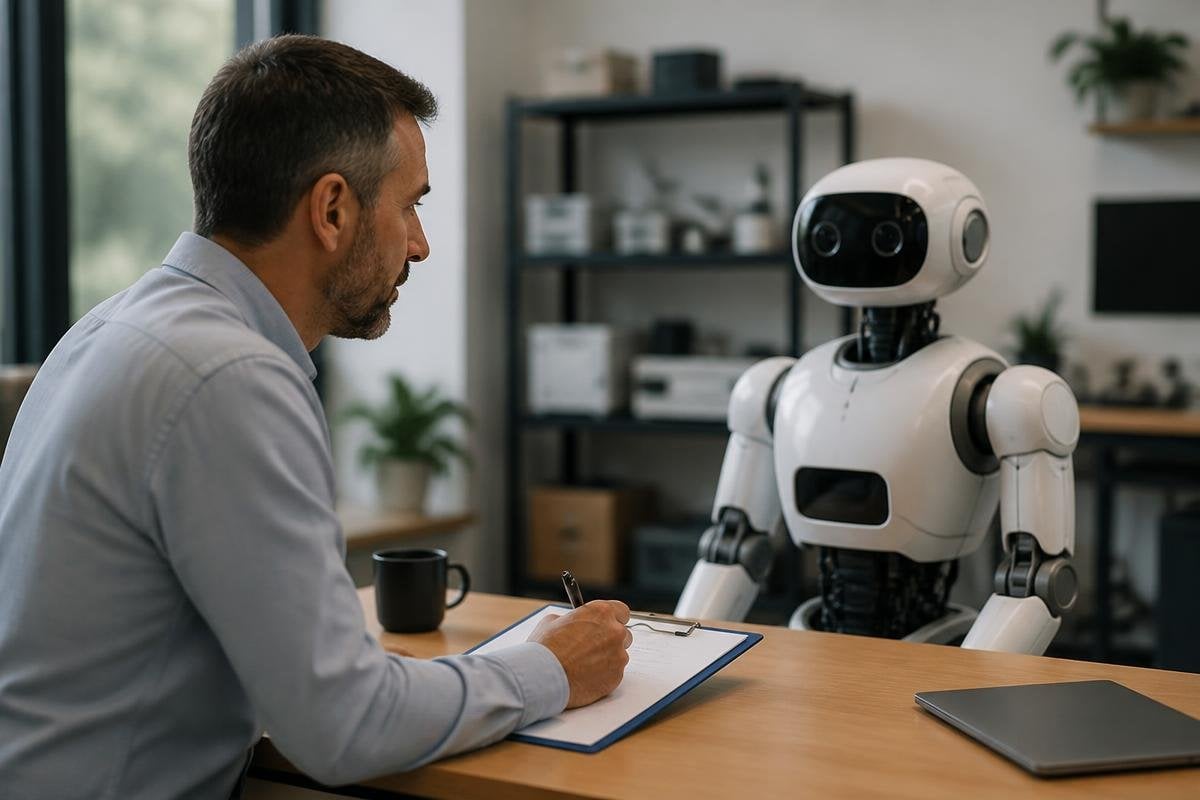
A talking robot may answer in less than a second, but its voice hides several separate systems. A microphone hears you, speech recognition turns sound into words, a language model forms a reply, and text-to-speech sends that reply through a speaker.
- Speech makes robots easier to use without a screen.
- A smooth reply does not prove that the robot understood the task.
- The useful test is what happens after the conversation.
How the conversation works
The robot starts by taking in sound. Its microphones look for speech and reduce some background noise, then speech recognition changes the sound into text. That text gives the language model something it can process.
The language model predicts a reply from the words it received and the instructions set by its maker. It may also use information from cameras, LiDAR, or other sensors, but only if the robot’s software connects those inputs to the conversation.
Text-to-speech then turns the reply into audio. A speaker plays the result, and the robot may move its head, eyes, or arms at the same time. Those movements can make the exchange feel more natural, but they don’t prove that the robot has formed a human-like view of the room.
The process has a weak point at every step. Noise can change the words the robot hears. A language model can give a confident answer that does not match the robot’s sensor data. Speech output can sound clear even when the answer is wrong.
What talking adds to a robot
Speech can remove the need to find a menu or press a button.
A worker could ask for a status update, a visitor could ask for directions, and a technician could request a machine state while keeping their hands free. The benefit comes from the task that follows the words.
The system also needs a way to act on the answer. If someone says, “Bring the red box,” the system must identify the box, locate it, plan a route, check its grip, and report a useful result. A spoken reply alone does none of that work.
Conversation becomes meaningful only when the machine can turn words into safe action. Independent coverage of conversational robot systems lets readers follow the companies, research, and real-world tests behind that work instead of judging a robot by fluent speech alone.
Where the human voice can mislead you
The system can pause, change its tone, and use short phrases that sound polite. These features improve the exchange for people who need directions or status reports, yet they can also make weak answers seem more reliable than they are.
The robot’s memory needs close attention too. Some systems keep context during one session, then lose it when the session ends. Others may store transcripts or send audio to a remote server. The maker needs to state what data leaves the robot and how long it stays there.
In a home, the robot may hear private conversations. A robot in a hospital, shop, or factory may record people who never agreed to speak with it. Clear indicators, local processing, and a physical mute control give people a way to see and stop the listening system.
I’d treat a fluent voice as an interface, not proof of intelligence.
A practical check before you buy
Use this checklist when a talking robot is being considered for work, education, or a public space:
- Name the task: write the exact action the robot must complete after hearing a request.
- Test background noise: use the robot near fans, doors, vehicles, or several people speaking.
- Check the failure reply: find out what it says when words, objects, or locations are unclear.
- Ask about data: confirm where audio and transcripts go, how long they remain, and who can access them.
- Measure the handoff: see how a person takes control when the robot cannot finish the job.
That last check often matters more than the voice. A robot that admits a missed command and gives control back is easier to use than one that speaks smoothly while taking the wrong action.
The next proof for talking robots will come from repeatable tasks: the same request, in the same noisy room, followed by a correct physical result. Until makers publish those tests, judge the speaker by what the robot does after it stops talking.
