



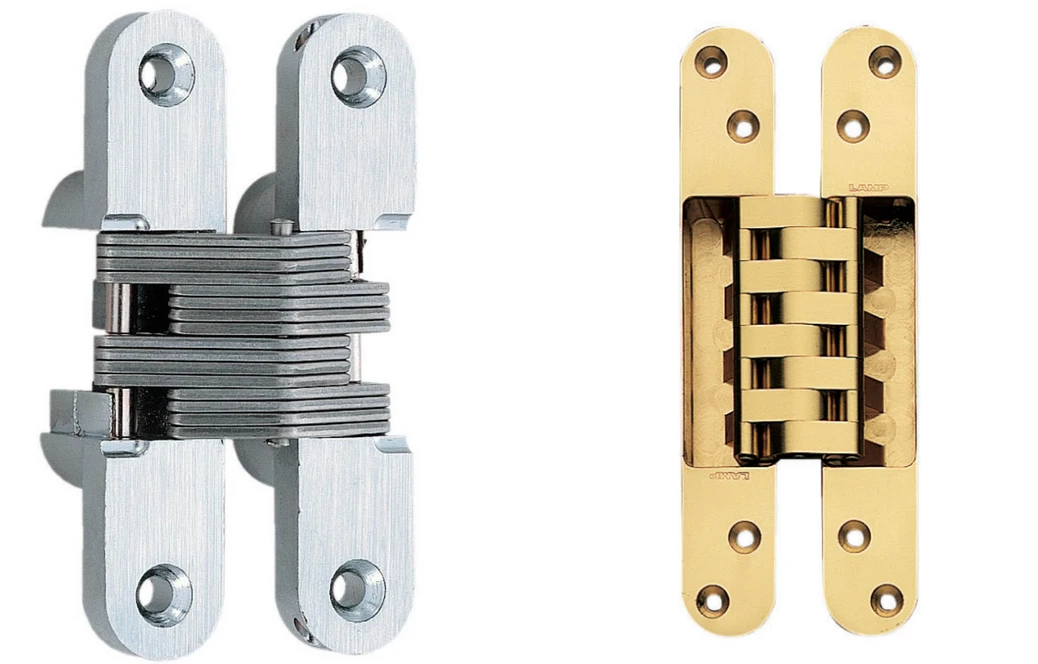
Small hardware components can have a major influence on how a cabinet or furniture door looks and performs. Among the most popular choices for modern cabinetry are Concealed hinges, which are designed to remain hidden when the door is closed. This creates a cleaner appearance while also providing useful adjustment options for achieving accurate door alignment.
Unlike traditional hinges that can remain visible on the outside of a cabinet, concealed designs are installed between the door and cabinet structure. Many modern versions also provide adjustable positioning and soft-close functionality.
What Are Concealed Hinges?
A concealed hinge is a type of hinge installed primarily inside the cabinet and door rather than on their visible exterior surfaces. A common European-style concealed hinge consists of a circular cup fitted into the back of the cabinet door, a hinge arm, and a mounting plate attached to the cabinet.
The cup is commonly around 35 mm in diameter, although exact dimensions and configurations can vary by product. Because the mechanism is hidden when the door is closed, it produces a smooth and uncluttered appearance.
Why Are Concealed Hinges So Popular?
The popularity of concealed hinges comes from the combination of appearance and functionality. Modern kitchens, wardrobes, storage units, and built-in furniture often rely on clean lines, minimal hardware, and accurately aligned doors.
With the hinge hidden behind the door, attention remains on the cabinet material, finish, handles, or overall design. This makes concealed hardware particularly suitable for contemporary and minimalist interiors.
Another advantage is adjustability. Many concealed hinge systems allow the installer to make small corrections to the door’s side-to-side, vertical, and depth positioning after installation.
Main Types of Concealed Hinges
Full Overlay Hinges
Full overlay hinges are designed for doors that cover most or all of the cabinet’s front edge. They are frequently used in modern frameless cabinetry because they create a continuous appearance across multiple doors.
The exact hinge arm and mounting plate combination must match the cabinet construction and desired overlay. Choosing the wrong configuration can result in incorrect spacing or doors that do not close properly.
Half or Partial Overlay Hinges
Partial overlay hinges are useful when two cabinet doors share a central frame section. Each door covers only part of the cabinet structure, leaving an appropriate gap between neighboring doors.
This configuration is particularly useful in certain face-frame cabinet designs where the doors need to share available frame space.
Inset Concealed Hinges
Inset hinges are designed for doors that sit inside the cabinet opening rather than over its front surface. When properly installed, the door can sit flush with the surrounding cabinet frame.
Inset applications require greater precision because the gaps around the door are highly visible. Accurate measurements and careful adjustment are therefore especially important.
The Benefits of Concealed Hinges
A Cleaner Appearance
The most obvious benefit is visual. Since the hinge is hidden when the door is closed, there is less visible hardware interrupting the cabinet’s design.
This makes concealed hinges an excellent choice for modern kitchens, wardrobes, bathrooms, offices, and custom furniture.
Better Door Alignment
Many modern concealed hinges provide multiple adjustment directions. Depending on the hinge design, installers can adjust the door horizontally, vertically, and in or out.
This is useful for correcting small gaps and keeping neighboring doors evenly aligned.
Soft-Close Options
Some concealed hinges incorporate soft-close mechanisms. Instead of allowing a door to slam shut, the mechanism slows the final part of its movement.
Soft-close hinges can be particularly useful for frequently used kitchen cabinets, wardrobes, and storage units where reducing noise and impact is desirable.
Easy Maintenance and Adjustment
A major practical benefit is that many concealed hinge systems can be adjusted without completely removing the door. If a cabinet door becomes slightly uneven over time, the adjustment screws may allow the position to be corrected.
This can save time compared with traditional hinge systems that may require repositioning or refastening hardware.
Where Can You Use Concealed Hinges?
Concealed hinges are commonly used in:
- Kitchen cabinets
- Bedroom wardrobes
- Bathroom storage
- Office cabinets
- Built-in furniture
- Pantry doors
- TV and entertainment units
- Custom cabinetry
- Commercial storage furniture
Their versatility makes them suitable for both residential and commercial applications. The appropriate hinge, however, depends on the door thickness, cabinet construction, overlay, required opening angle, and weight.
What to Consider Before Choosing Concealed Hinges
Choosing a hinge simply because it is hidden is not enough. Several measurements and design factors should be considered before purchasing.
Cabinet Construction
Determine whether the cabinet is frameless or has a face frame. Different constructions may require different mounting arrangements.
Door Overlay
Establish whether the door is full overlay, partial overlay, or inset. This affects the hinge geometry and mounting plate required.
Door Thickness and Weight
The hinge must be suitable for the door’s dimensions and weight. Larger or heavier doors may require an appropriate number of hinges and a hinge system designed for the application.
Opening Angle
Different hinges can provide different opening angles. Consider how far the door needs to open and whether nearby walls, drawers, handles, or other cabinet doors could interfere.
Soft-Close Function
If quiet closing is important, consider a soft-close version. However, soft-close should be treated as a feature rather than a substitute for selecting the correct hinge size and load capacity.
Installing Concealed Hinges Correctly
Installation requires more precision than many surface-mounted hinge systems because the door normally needs a correctly positioned recess for the hinge cup.
The installer should carefully measure the cup location, drilling depth, mounting position, overlay, and distance from surrounding edges. The mounting plate must also be secured correctly to the cabinet.
A poorly positioned hinge can cause uneven gaps, rubbing, doors that fail to close, or excessive stress on the hardware. For that reason, accurate drilling and careful adjustment are essential.
Common Problems With Concealed Hinges
Even quality hinges can develop problems when they are incorrectly installed or adjusted. A door may sag, sit unevenly, rub against another door, or fail to close completely.
Before replacing a hinge, check whether the adjustment screws have shifted or whether mounting screws have become loose. Many concealed systems are specifically designed to allow small alignment corrections after installation.
If the hinge itself is damaged, however, replacement should be based on the original hinge’s specifications rather than simply choosing a visually similar model.
Concealed Hinges vs. Traditional Hinges
Traditional exposed hinges can provide a decorative appearance and may be relatively straightforward to install. However, they remain visible when the door is closed.
Concealed hinges take a different approach. They prioritize a clean exterior, precise alignment, and hidden mechanical components. This makes them especially appropriate for contemporary furniture and cabinetry where uninterrupted surfaces are part of the design.
The best choice ultimately depends on the cabinet style, construction method, appearance desired, and functional requirements.
How to Maintain Concealed Hinges
Regular maintenance is relatively simple. Keep the hinge area free from excessive dust and debris, check mounting screws periodically, and pay attention to changes in door alignment.
If a door begins rubbing or develops an uneven gap, address the problem early. A small adjustment may solve the issue before continued use places additional stress on the hinge or cabinet.
For soft-close models, avoid forcing the door shut because doing so can interfere with the damping mechanism.
Are Concealed Hinges a Good Choice?
For modern cabinetry, concealed hinges offer an excellent combination of appearance, adjustability, and everyday functionality. Their hidden installation creates a streamlined look, while adjustable mechanisms make it easier to achieve accurate door alignment.
They are particularly valuable when the goal is to create furniture or cabinetry with clean lines and minimal visible hardware. However, selecting the correct hinge configuration is essential. Overlay, cabinet construction, door dimensions, opening angle, and weight should all be considered before installation.
Final Thoughts
A hinge may be a small component, but it plays an important role in the performance and appearance of a cabinet door. Concealed hinges provide a practical way to keep hardware out of sight while supporting smooth operation and precise adjustment.
For kitchens, wardrobes, bathrooms, offices, and custom furniture, they can deliver the clean appearance associated with modern cabinetry without sacrificing everyday usability. The key is to select the correct configuration and install it accurately so the finished doors remain properly aligned and operate smoothly for years.
