



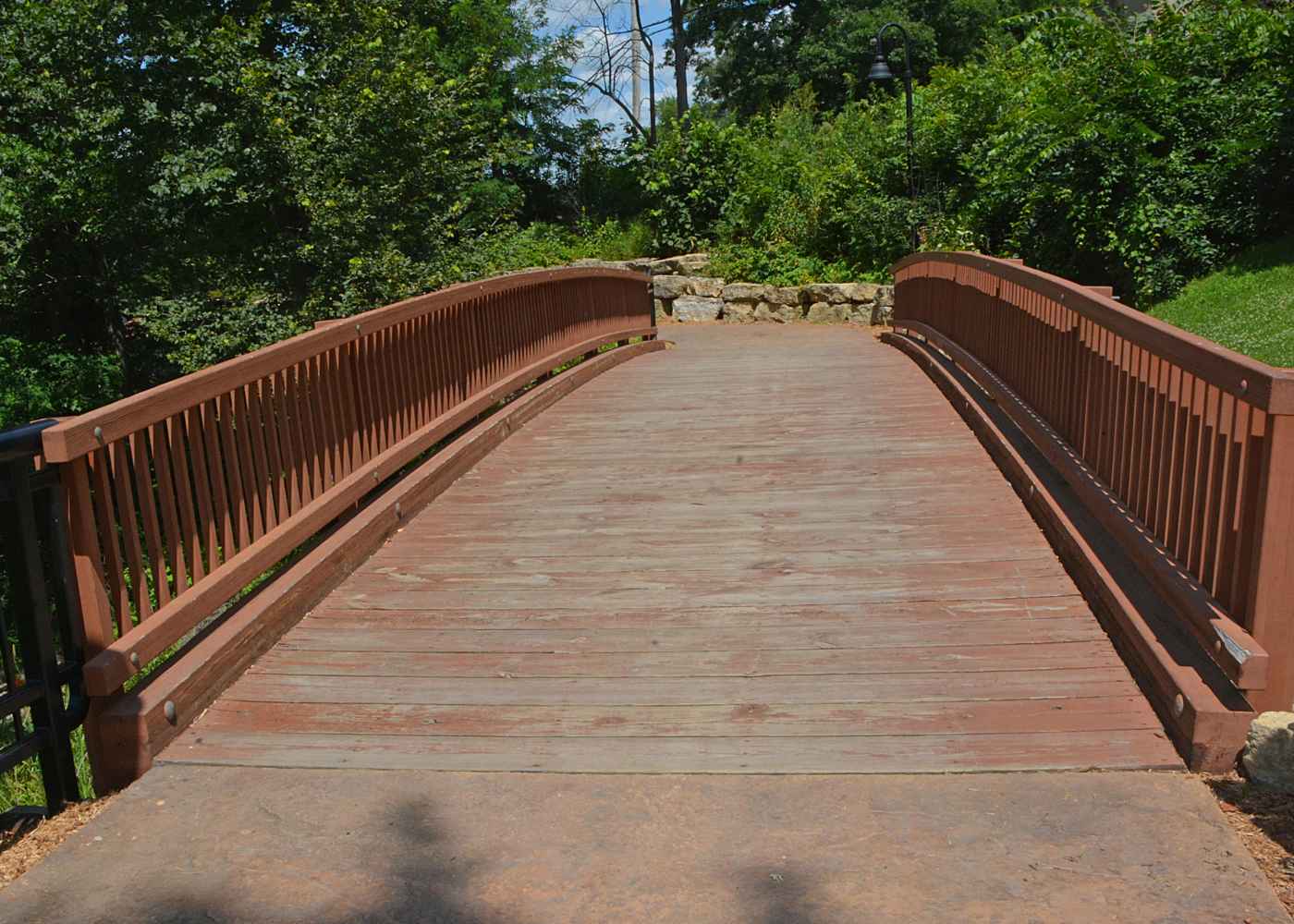
Bridge construction traditionally relies on steel and concrete, materials that carry significant environmental costs from extraction through installation. Mining iron ore, producing cement, transporting heavy materials and pouring foundations all generate carbon emissions, habitat disruption, water pollution and resource depletion that accumulate across the construction industry. Timber offers an alternative that addresses these concerns while delivering structural performance that matches or exceeds traditional materials in many applications.
Understanding the environmental advantages of wood-based bridge construction helps project planners make choices that serve both functional needs and ecological responsibility.
Sequestering Carbon Throughout Service Life
Trees absorb carbon dioxide as they grow, storing carbon within their cellular structure. When those trees become bridge timbers, that carbon remains locked within the wood for the entire service life of the structure. This sequestration continues for decades, keeping carbon out of the atmosphere rather than releasing it during manufacturing processes.
Steel and concrete production releases substantial carbon dioxide through energy-intensive manufacturing. Cement kilns and steel foundries count among the largest industrial sources of greenhouse gas emissions globally.
The contrast becomes stark when comparing lifecycle emissions. Timber bridges often represent net carbon storage while steel and concrete alternatives generate net emissions that contribute to atmospheric carbon accumulation.
Sourcing Materials Sustainably
Responsible timber harvesting follows sustainable forestry practices that ensure forests regenerate faster than they are cut. Managed forests actually capture more carbon than old-growth stands because actively growing trees sequester carbon more rapidly than mature specimens.
Certification programs verify that timber comes from forests managed according to environmental standards. These programs track chain of custody from forest through mill to construction site, ensuring that sustainability claims reflect actual practices.
Choosing trusted companies like All Timber Structures, Inc. (ATS) ensures access to builders who understand both the technical and environmental demands of timber bridge construction. Their engineered timber systems combine traditional craftsmanship with modern standards, delivering durability while maintaining the sustainability benefits of wood-based construction.
Minimizing Construction Footprints
Bridge construction in environmentally sensitive areas requires techniques that limit disturbance to surrounding ecosystems. Wetlands, watersheds, wildlife corridors and protected habitats all demand careful attention during construction activities.
Timber bridge construction can proceed directly from deck level, eliminating the need for heavy equipment operating in waterways or wetland areas. This approach avoids the sediment disturbance, compaction and vegetation damage that conventional construction methods produce.
Pre-engineered components reduce field labor and time spent on site. Components fabricated off-site arrive ready for assembly, minimizing the duration of construction activities that affect surrounding environments. Shorter construction periods mean less noise, fewer emissions from equipment operation and reduced overall impact on sensitive areas.
Adapting to Challenging Environments
Remote locations, limited access areas and environmentally restricted sites often make traditional construction impractical or prohibitively expensive. Heavy concrete trucks and steel delivery equipment require substantial access infrastructure that may not exist in rural or wilderness settings.
Timber components weigh less than equivalent steel or concrete elements, allowing transport and installation with lighter equipment. This weight advantage proves particularly valuable in locations where access roads cannot support heavy loads or where minimizing vehicle traffic protects fragile landscapes.
The material’s natural flexibility provides advantages in seismically active regions and areas subject to ground movement. Timber structures absorb stress without the brittle failure that concrete can experience under dynamic loading.
Extending Service Life Through Engineering
Modern timber bridge construction bears little resemblance to primitive log structures. Laminated beams, treated structural timbers and hybrid connection systems allow for load capacities and service lives that meet contemporary engineering standards.
Proper drainage planning prevents moisture accumulation that would accelerate decay. Reinforced abutments distribute loads effectively while corrosion-resistant hardware maintains connection integrity over decades of service.
With appropriate design, maintenance and materials, timber bridges perform reliably for generations. This longevity maximizes the environmental return on construction investment by extending the period during which embodied carbon remains sequestered.
Supporting Local Economies
Timber sourcing often supports domestic forestry operations and local milling facilities rather than importing materials from distant locations. This local sourcing reduces transportation emissions while strengthening regional economies.
Rural communities particularly benefit from timber bridge construction that employs local labor and purchases regional materials. The economic activity stays within communities rather than flowing to distant manufacturing centers.
The complete supply chain from forest management through construction creates employment opportunities across skill levels. Sustainable forestry, timber processing and bridge building all provide quality jobs that support families and communities.
Making the Sustainable Choice
Infrastructure decisions made today affect environments for decades. Choosing timber for bridge construction reduces carbon emissions, minimizes site disturbance, supports sustainable forestry and delivers structures engineered for long-term performance.
The environmental case for timber bridges strengthens as climate concerns increasingly influence infrastructure planning. What once seemed like a traditional material choice now represents forward-thinking environmental stewardship that future generations will appreciate.
